
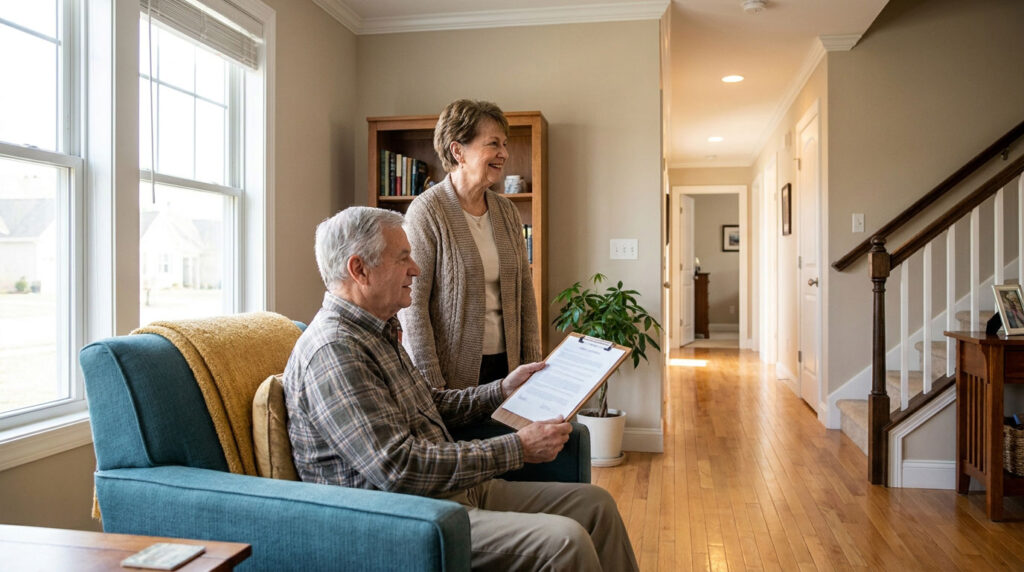
A comfortable home should support your routines, not make everyday tasks feel like obstacles. This home safety checklist for older adults offers a practical way to review each room, identify concerns, and decide which changes deserve attention first. The goal is greater independence, not a home that looks or feels like a hospital.
The topic is especially timely as Falls Prevention Awareness Week, September 21–25, 2026, approaches. However, checking your surroundings is useful throughout the year. Start with the rooms you use most and involve the person who lives there in every decision.
Start Your Home Safety Checklist With a Walkthrough
Take a notebook and follow an ordinary day: getting out of bed, using the bathroom, preparing breakfast, and answering the door. Review the same routes after dark. Rather than asking only whether a room looks tidy, ask whether everyday tasks feel comfortable and manageable.
Mark each concern as “change now,” “arrange help,” or “discuss with a professional.” Ask permission before rearranging someone else’s belongings. A useful checklist respects personal preferences while creating a clear plan for addressing hazards.
Living Room, Hallways, and Stairs
Keep Everyday Walking Routes Clear
Look between the sofa, doorway, telephone, and frequently used furniture. Move loose cords, shoes, and other trip hazards out of these routes. Remove unsecured throw rugs or address slipping and curled edges. Keep pet toys away from walkways and notice where pets rest before standing or walking.
The National Institute on Aging’s room-by-room guidance also recommends seating that is easy to get into and out of. Keep everyday items within comfortable reach rather than behind furniture.
Check Lighting and Stair Supports
Arrange secure handrails on both sides of stairs, keep steps free of storage, and provide lighting at the top and bottom. Do not carry objects that block your view of the steps. The CDC’s fall-prevention recommendations emphasize handrails, brighter lighting, and removing trip hazards. Ask for help with repairs rather than improvising a temporary support.
Room check: Can you travel between the entrance, seating, and stairs without stepping over anything? Can you switch on a light before entering a dark area? Record any loose flooring or unreliable handrail for repair before calling the room finished.
Bathroom: Improve Traction and Support
Review the Shower, Tub, and Toilet
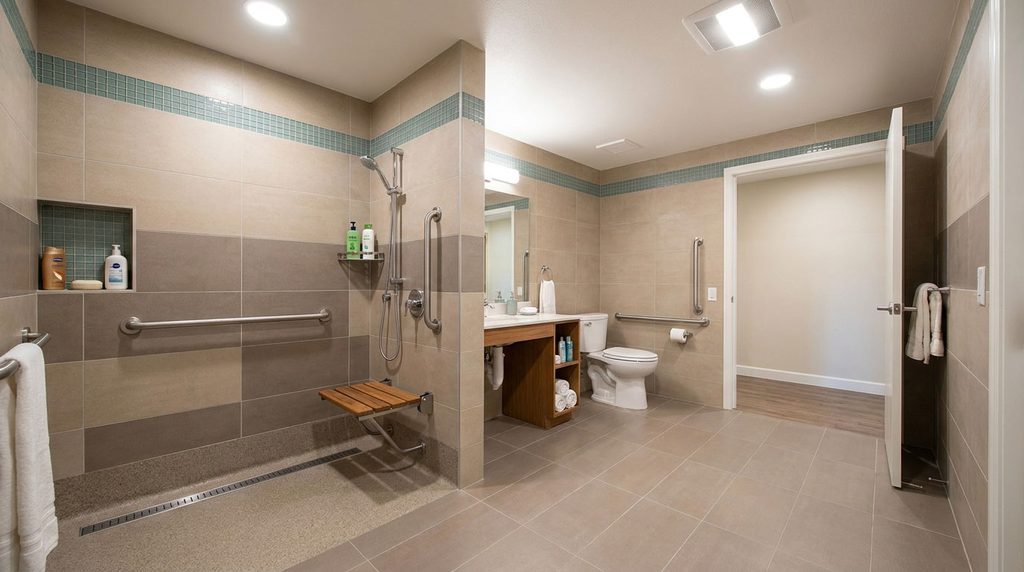
Check where you place your feet when entering the shower and where you reach when standing from the toilet. Add suitable anti-slip treads to bathing surfaces and keep the surrounding floor dry. Store soap, shampoo, and towels where they are easy to reach without stretching or twisting.
A shower seat or handheld showerhead may make bathing more manageable. The National Council on Aging’s home-modification guidance highlights these options alongside grab bars. Choose equipment around the user’s abilities and bathroom layout rather than assuming one arrangement suits everyone.
Before Installing Grab Bars
Discuss placement with an occupational or physical therapist when needed, and use a qualified installer for secure mounting. A professional assessment can also help determine whether toilet-height adjustments would be appropriate. Treat these decisions as individual safety improvements, not decorative upgrades.
Bathroom check: Can you reach what you need from a comfortable position? Is the shower exit clear? Do existing supports feel secure during normal use? Do not deliberately test a loose fixture with your body weight; mark it for professional attention instead.
Bedroom: Make Nighttime Movement Easier
Keep a light, glasses, and a charged phone within easy reach of the bed. Provide a clear, illuminated route to the bathroom, and keep a flashlight nearby for outages. The NIA’s bedroom safety recommendations offer a useful starting point.
Consider a sturdy chair for getting dressed, as recommended in NCOA’s home-modification guidance. Ask whether reaching bedside items or moving through the room feels difficult. Do not wait for a fall to raise concerns about an awkward arrangement.
Try a bedside review before settling down for the evening: locate the light switch, place essential items where you expect them, and check that shoes or laundry have not narrowed the route. A family member can help without taking over decisions about where belongings belong.
Bedroom check: What happens between waking and reaching the bathroom? Note any moment when you must search, stretch, or maneuver around furniture. Bring those observations to a home assessment rather than treating a difficult movement as something you simply have to accept.
Kitchen and Dining Area: Keep Tasks Within Reach
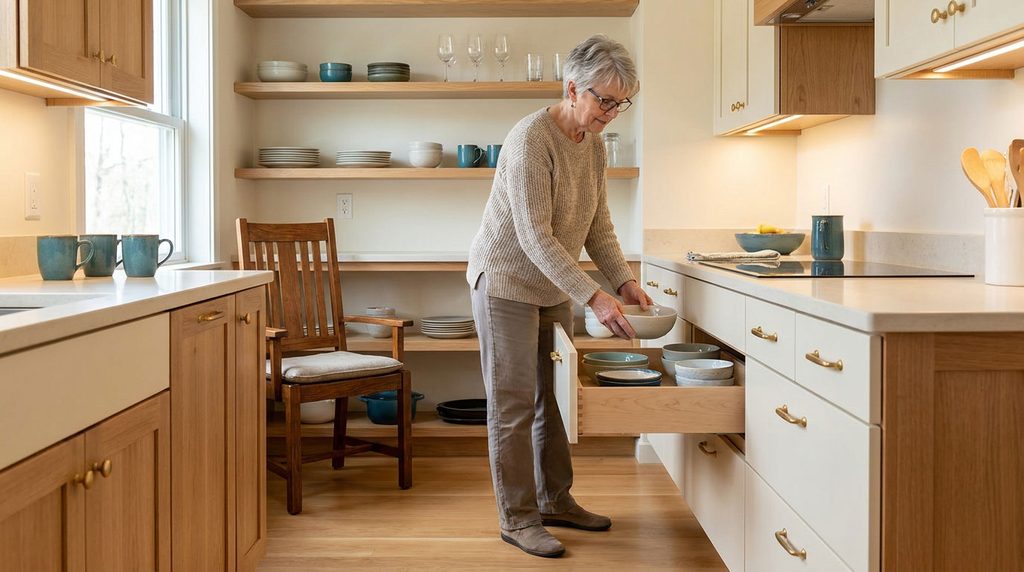
Move everyday dishes and utensils into accessible storage, and wipe up spills promptly. Avoid standing on furniture to reach high shelves. The NCOA’s aging-in-place recommendations emphasize accessible storage and arrangements that make daily tasks easier.
Cooking also deserves a separate safety check. Turn pot handles toward the back of the stove and stay nearby while using a burner. Follow the U.S. Fire Administration’s cooking guidance: turn the burner off before leaving the kitchen. Arrange meal preparation so you do not need to step away to find supplies.
Entrance, Porch, and Outdoor Walkways
Inspect exterior steps for damage or uneven surfaces. Clear leaves, branches, and other debris from the route to the door. Turn on the porch light before returning after dark. NIA’s room-by-room guidance also recommends improving traction on outdoor stairs and treating icy walkways when winter conditions require it.
Check Alarms and Emergency Readiness
Working alarms belong on the checklist too. The U.S. Fire Administration recommends smoke alarms inside bedrooms, outside sleeping areas, and on every level of the home. Test them monthly and follow replacement instructions. Ask about appropriate alerting devices when hearing loss makes standard alarms difficult to hear.
Install carbon monoxide alarms on every level and outside separate sleeping areas, following the manufacturer’s placement instructions. Keep emergency contacts accessible and discuss who could help with household repairs or urgent practical needs.
Turn Your Findings Into a Manageable Plan
Choose a few priorities rather than attempting everything at once. Clearing a walking route might be today’s task; arranging grab-bar installation may require an appointment. Write down who will handle each change and when you will review it together.
Home changes are only part of fall prevention. Speak with a healthcare professional about falls, unsteadiness, or dizziness. CDC guidance also recommends medication reviews, eye checks, and strength and balance activities. Do not stop prescribed medicines on your own.
Return to your home safety checklist for older adults when routines or mobility needs change. Explore Senior Safety Digest and browse our articles for additional educational reading.
This article provides general educational information and does not replace an individualized medical or home-safety assessment.